
Why Science Is Swapping Bleach for HOCl in the Fight Against Mold

For decades, standard commercial mold removal meant spraying bleach and walking away. But property managers and facility engineers know the hidden flaw: bleach’s negative charge prevents penetration into porous drywall or wood. Moisture sinks in, feeding mold roots (hyphae) and driving rapid regrowth.

Enter Hypochlorous Acid (HOCl), the natural oxidizer revolutionizing commercial mold remediation, facility maintenance, and indoor air quality (IAQ) compliance.
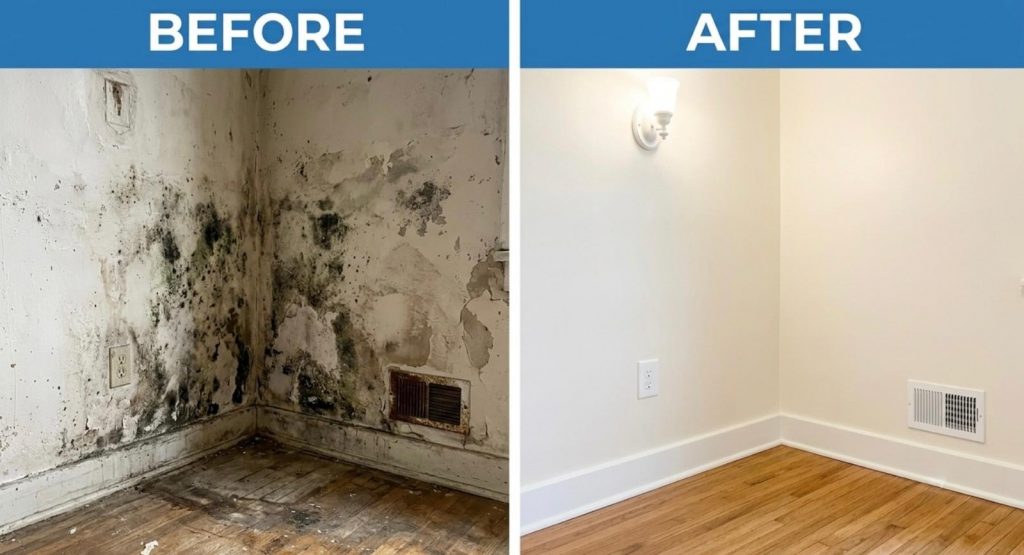
Why HOCl Outperforms Bleach in Commercial Buildings

  1. Superior Biofilm & Cell Penetration Unlike negatively charged bleach, HOCl is electrically neutral. It slips past microbial membranes and biofilms, oxidizing mold from the inside out to kill spores at the source and eliminate costly callbacks.
  2. Fast Kill Times at Low PPM Peer-reviewed testing demonstrates high-level spore reduction at low concentrations:
    • Stachybotrys (Toxic Black Mold): 99.9% reduction at 100–200 PPM.
    • Aspergillus niger: Inactivated in under 2 minutes at ~86 PPM.
    • Cladosporium: Neutralized at ~40 PPM.
    • HOCl is up to 100x more effective per molecule than bleach, avoiding harsh chemical saturation.
  3. Whole-Structure Dry-Fogging Cold micro-droplet fogging keeps stabilized HOCl suspended in the air. Breaking down into simple saline water, it leaves zero VOCs or chemical residues, neutralizing airborne spores and reaching HVAC ducts and wall cavities with minimal facility downtime.
  4. Neutralizing Dangerous Mycotoxins Traditional disinfectants leave toxic, non-living chemical byproducts (mycotoxins) intact on surfaces. Stabilized HOCl donates electrons to break down their complex carbon bonds, rendering them inert on contact to protect occupant health.

HOCl vs. Bleach: Commercial Comparison

  • Kill Mechanism: HOCl is neutral (penetrates roots); Bleach is negative (surface only).
  • Porous Surfaces: HOCl penetrates wood and drywall; Bleach traps moisture, accelerating regrowth.
  • Occupant Safety: HOCl is non-toxic with zero VOCs; Bleach emits harsh, hazardous fumes.
  • Facility Downtime: HOCl allows rapid re-entry (<1 hour); Bleach requires extensive ventilation.
  • Asset Protection: HOCl is 100% non-corrosive; Bleach causes fading and structural corrosion.

The Bottom Line for Facility Professionals

As regulatory standards and tenant expectations for indoor air quality tighten, caustic chemicals are a growing liability. HOCl delivers hospital-grade antimicrobial performance while protecting occupants, cutting complaints, and preserving structural assets.

Ready to optimize your facility’s remediation protocols and lower operational downtime? Let’s connect in the comments or send a direct message to discuss scalable HOCl integration for your properties.

#PropertyManagement #IndoorAirQuality #MoldRemediation #FacilitiesManagement #HOCl #EnvironmentalHealth #BuildingMaintenance #RemediationScience #CommercialRealEstate

Leave a Reply

Your email address will not be published. Required fields are marked *

Latest Posts

Unveiling the Mystery of HMPV Virus: Can

The Impact of Hypochlorous Acid in African

Shopping cart0
There are no products in the cart!
Continue shopping
0