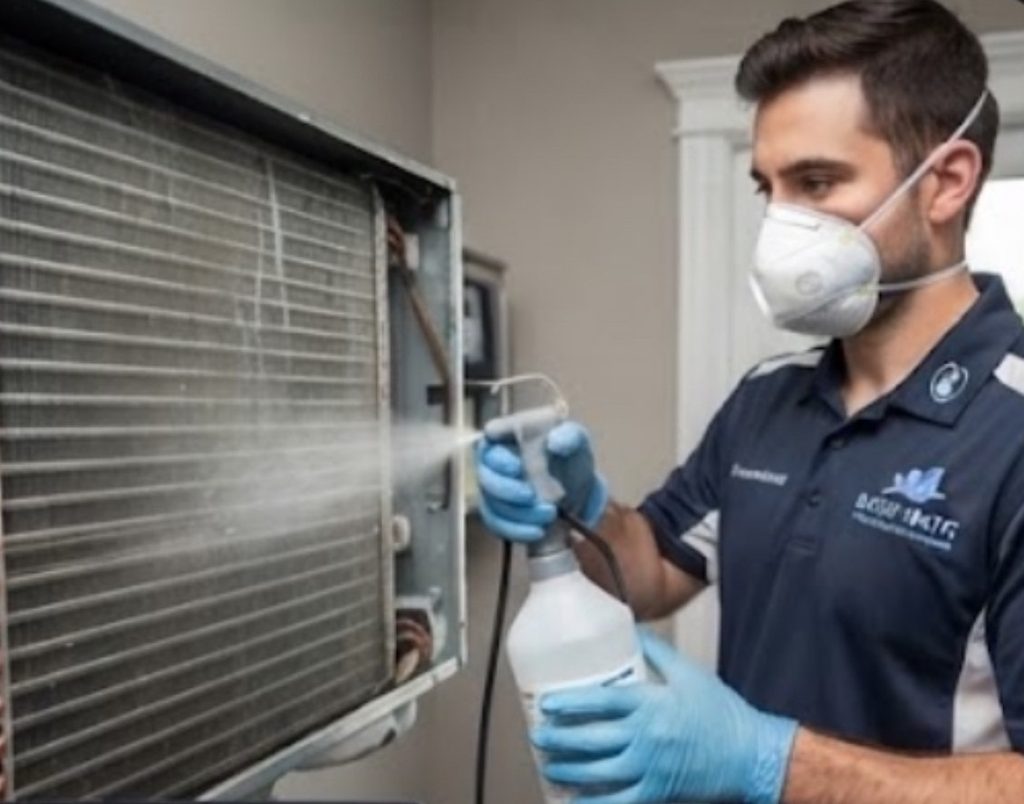
As the UK adapts to increasingly hotter, longer summers, dealing with dirty sock syndrome ac air is fast shifting from an occasional luxury to a household essential. However, as thousands of British homes install these systems, we are quietly importing a problem that hotter climates have managed for decades: indoor air contamination.
The Hidden Threat Inside Your Air Conditioner
Air conditioners do much more than just chill air, they pull massive amounts of humidity out of it. Deep inside every split-system unit, moisture drips over dark, hidden evaporator coils and pools into a condensate tray.
This creates a near-perfect breeding ground for:
Mold spores and fungal colonies
Mildew
Pathogenic bacteria like Legionella and Pseudomonas
The result is notorious “dirty sock syndrome AC units are famous for- a musty odor lothat signals your brand-new cooling system is actively blowing bio-contaminants straight into your living space.
Standard Manufacturer Guidance: Where It Falls Short
If you read maintenance manuals from major manufacturers like Daikin, Mitsubishi, or Carrier, their recommended cleaning procedures are virtually identical:
Filter Care: Vacuum or wash dust filters using lukewarm water and mild dish soap every 2 to 4 weeks.
Coil Maintenance: Wipe accessible parts with plain water or non-acidic, neutral detergents.
Strict Warnings: Never use bleach, ammonia, or harsh chemical solvents. Manufacturers explicitly forbid bleach because it rapidly corrodes delicate aluminum cooling fins, strips protective copper coatings, and destroys internal seals.
The Maintenance Deadlock
While basic soap and water remove surface dust, they do not kill stubborn mold spores, fungal networks, or bacteria embedded deep within damp condensate trays.
Homeowners and property managers are left trapped between two bad choices:
Using gentle soap that leaves microbial hazards behind.
Resorting to harsh industrial chemicals that corrode expensive equipment and fill homes with toxic VOC (volatile organic compound) fumes.
Why Hypochlorous Acid (HOCl) Changes the Game
This maintenance stalemate is precisely why Hypochlorous Acid (HOCl) is revolutionizing HVAC hygiene. When formulated at optimal parameters (300 ppm at a pH of 5.5–6.5), HOCl bridges the gap between gentle eco-friendly care and medical-grade disinfection:
Destroys Biological Buildup at the Root: Unlike standard soaps that only wash grime down the drain, HOCl directly oxidizes mold spores, mildew, and bacteria at a cellular level, eradicating “dirty sock syndrome” at the source.
Safe for Delicate Metals: Because HOCl is naturally non-corrosive at its target pH, it protects fragile aluminum coil fins and copper tubing from the pitting and structural decay caused by bleach or heavy acids.
Zero Toxic Off-Gassing: Unlike aggressive chemical cleaners, HOCl leaves behind zero hazardous chemical residues. It naturally breaks down into simple saline water, allowing you to sanitize your unit without pumping toxic fumes into your home.
Maintenance Note: HOCl is a powerful disinfectant, not a heavy degreaser. Years of caked-on kitchen grease or heavy grime require an initial mechanical removal or neutral soap wash first. However, for routine microbial control and preventive sanitization, HOCl offers unmatched safety and material compatibility.
Rethinking Indoor Air Quality for Modern Britain
As cooling becomes a permanent pillar of UK infrastructure, our standards for indoor air hygiene must evolve. Cooling your home shouldn’t come at the cost of your respiratory health.
Are you an HVAC professional, property manager, or homeowner battling musty odors this summer? How is your
current cleaning routine holding up? Let’s talk in the comments below!
Frequently Asked Questions\How often should I clean my AC coils?
For optimal indoor air quality and to prevent microbial growth, inspect and sanitize your split system’s condensate tray and coils at least once every summer season using an eco-friendly disinfectant like HOCl.”
Thank you for reading and stay cool!