For International Healthcare Procurement, Regional Distributors, and Emergency Response Supply Chains
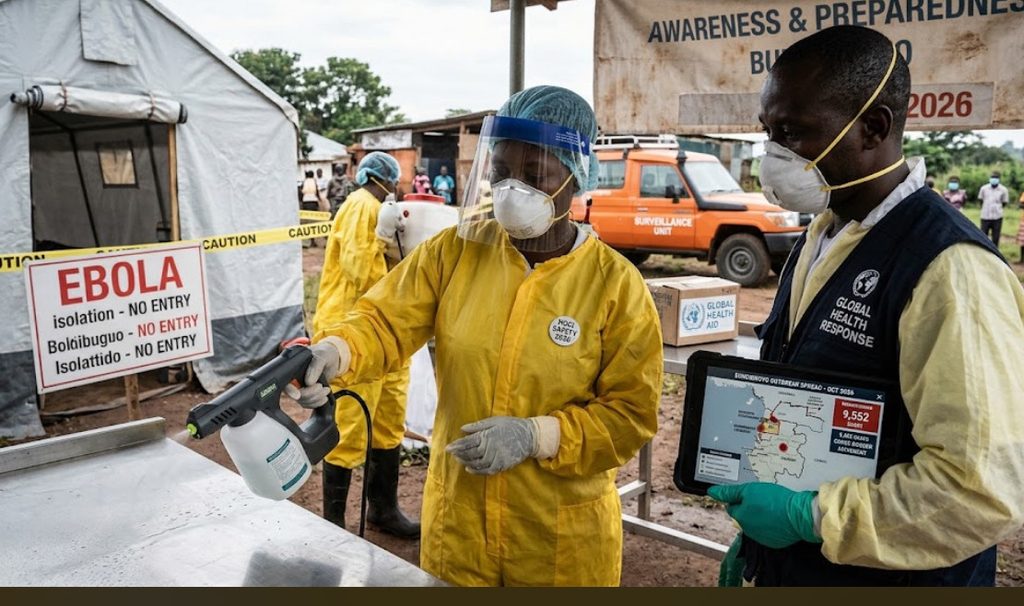
The 2026 Bundibugyo Ebola outbreak highlighted a critical vulnerability in global biosecurity: when pharmaceutical shields like vaccines are absent, immediate environmental sanitation is the primary line of defense.
As health authorities and commercial facility operators evaluate their emergency preparedness, the demand for high-throughput, non-toxic surface and ambient disinfectants has surged globally.
This technical briefing outlines the operational challenges of containment and explains why Hypochlorous Acid (HOCl) is rapidly becoming the gold standard for institutional biosecurity and emergency stockpiling.
The Operational Challenge: Containment Without Strain-Specific Vaccines
Unlike standard Zaire Ebola outbreaks, the Bundibugyo strain carries no approved vaccines or targeted antiviral therapeutics.
- 9,552+ Confirmed Cases Across East Africa
- 4,602+ Confirmed Fatalities (~48% Case Fatality Rate)
- Cross-Border Spread: Active commercial trade corridors accelerated transmission into regional transit hubs.
For global procurement managers and facility operators, this reality highlights a crucial operational requirement: resilient, non-pharmaceutical infection control protocols must be deployed rapidly to break transmission chains.
Environmental Biosecurity: Why Legacy Disinfectants Fail in High-Volume Operations
During rapid outbreak responses, standard commercial disinfectants present operational bottlenecks that compromise compliance and safety:
- Sodium Hypochlorite (Bleach): Highly corrosive to electronic diagnostics and metal surfaces; releases toxic chlorine gas requiring extensive ventilation.
- Quaternary Ammonium Compounds (QACs): Leave chemical residues that pose health risks during continuous ambient fogging and high-frequency wipe-downs.
- Alcohol-Based Sanitizers: Highly flammable in large-volume transport, non-effective on certain spore-forming vectors, and cost-prohibitive for large-surface decontamination.
The HOCl Advantage: Next-Generation Institutional Sanitation
Hypochlorous Acid (HOCl) has emerged as the preferred solution for global healthcare networks, transport hubs, and humanitarian response operations.
Key Performance Advantages for Institutional Buyers:
- Broad-Spectrum Microbicidal Efficacy: Rapid kill rates against resilient enveloped and non-enveloped viral pathogens, backed by updated 2026 human-exposure safety data.
- High Safety & Compliance Profile: Non-sensitizing, non-irritating to skin and lungs, eliminating the need for complex hazardous material handling during export and deployment.
- Versatile High-Volume Application: Ideal for automated misting, electrostatic sprayers, ambient fogging, and surface wipe-downs in high-footfall areas.
Partner with a Global Leader in Infection Control & HOCl Export
Whether you are scaling institutional stockpiles, supplying regional health networks, or seeking an exclusive distribution partnership, we deliver hospital-grade HOCl solutions engineered for rapid emergency deployment.
Ensure your facilities and supply chains are outbreak-ready.